
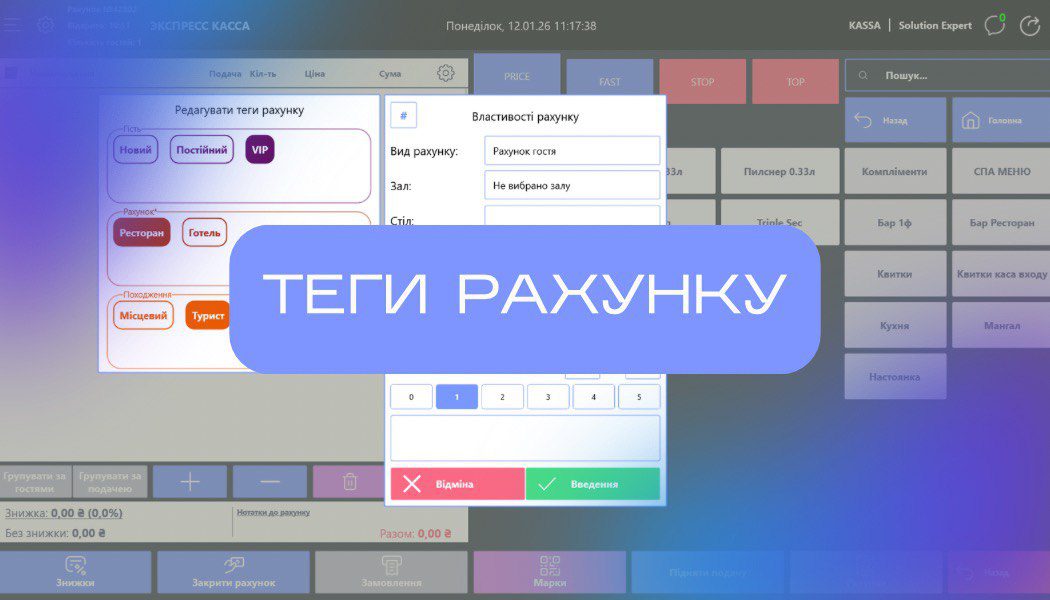




Servio POS has introduced the order tagging feature, which allows collecting structured data about orders and analyzing them through WebWD. This is especially important for HoReCa businesses where sales are distributed between the hall, delivery, pickup, aggregators, website, and advertising channels.
Why tags are needed
The main goal is to convert orders into analytics data to understand where orders come from, measure marketing effectiveness, identify profitable channels, and plan operational processes.
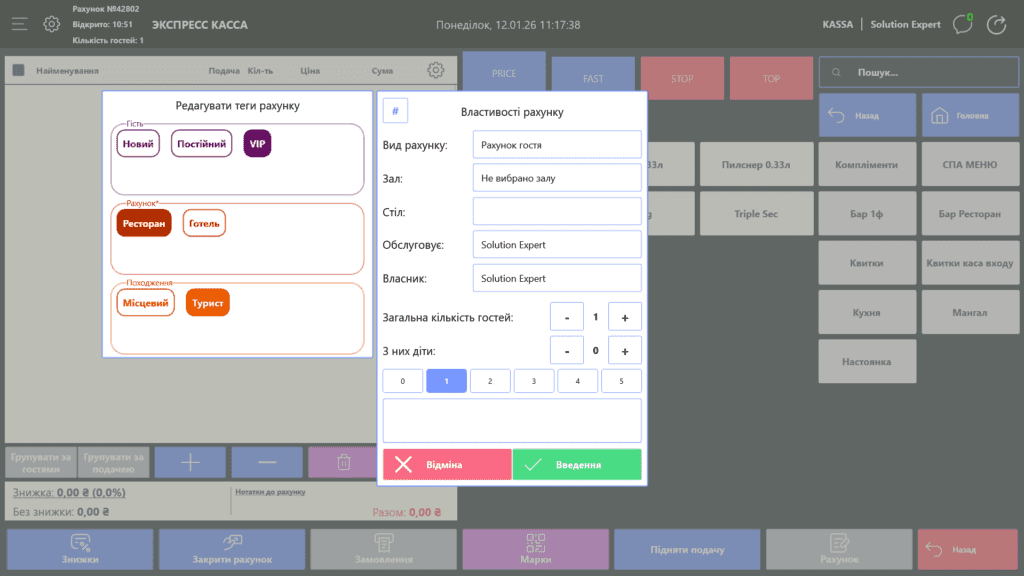
How tagging works:
- Configuration in WebWD
Administrators can create tag groups and configure color, display order, required selection, and multi-selection options. This creates a structured data model rather than chaotic comments. - Tagging in Servio POS
When creating or editing an order, staff can select tags, for example: Channel: Glovo, Bolt Food, Telegram, Instagram, Hall; Type: Delivery, Pickup, Dine-in; Marketing: Instagram Ads, Recommendations, Google Ads. - Analytics in WebWD
WebWD provides the report “Order Sources Analysis” (Sales group), showing order count, revenue, average check, trends, and channel share.
Analytical tasks solved by tagging
- Sales channel analytics
- Tags help answer which channels generate revenue, which do not, where the average check is high, and where margins are low.
Measuring marketing effectiveness
Tags allow associating sales with advertising, calculating ROI, and optimizing budgets.
Operational forecasting
Tags can be used to forecast purchases, kitchen strategy, workload, and staffing.
Who benefits
Owner – sees the real state of the business. Marketer – measures advertising, channels, ROI. Operations manager – forecasts and optimizes purchases. Network manager – compares different locations.
Real-life examples
Case : Delivery vs Dine-in. Tags Glovo, Bolt Food, Telegram, Hall. After a month: Glovo – 40% of orders, low average check; Telegram – 20%, repeat orders; Hall – 30%, highest margins.
Advantages for HoReCa
Transparent channel analytics, marketing efficiency measurement, correct budgeting, demand forecasting, and real data instead of intuition.
Tagging is a data tool that allows a restaurant to transition to a data-driven management model.

Ivan Bozhevskyi — developer of Servio POS